This is the story of my Skiddaw cloud inversion experience on 12 October 2025: an early start in cold valley fog, followed by that unforgettable moment when I climbed into clear air and found the Lake District fells rising above a sea of cloud.
An early start beneath the fog
I set off at around 04:00, hoping to reach higher ground before sunrise. At first, there wasn’t much to see. The lower slopes were wrapped in dense, cold fog and the beam from my head torch disappeared into the moisture ahead of me.
As I climbed, the air gradually changed. It became clearer and noticeably drier, and I started shedding layers even though I was gaining height. Walking out of that damp fog felt strangely dramatic. My nose had become so accustomed to the moist air below that the drier air above almost felt uncomfortable.
Breaking through above the cloud
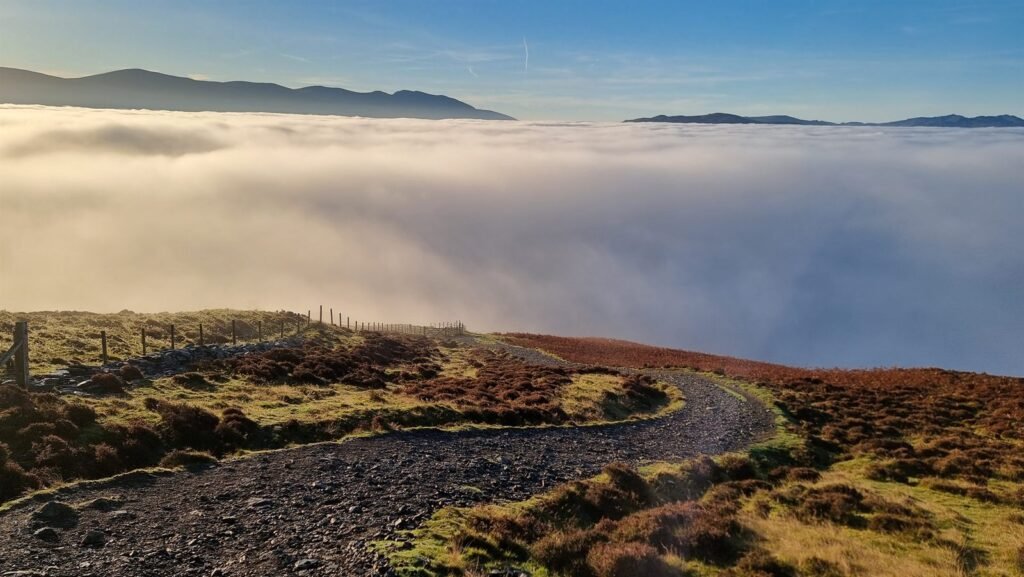
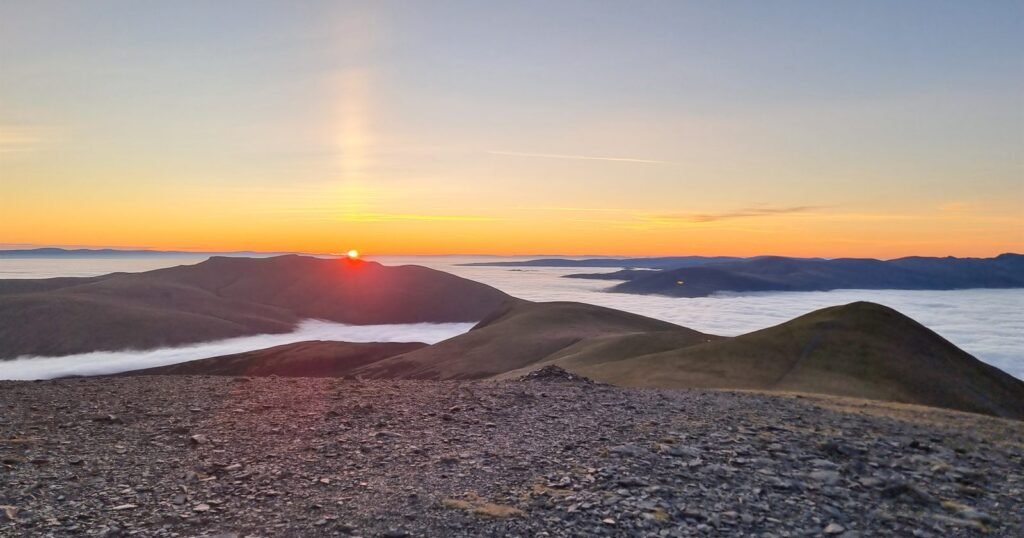
Eventually I emerged above the cloud layer. The valleys remained completely hidden while Skiddaw and the surrounding Lake District fells caught the morning light. From above, the cloud looked calm and almost solid, stretching between the higher ground like a white sea.
It is difficult to convey how different the world feels above an inversion. A walk that begins in grey, enclosed fog can suddenly open into sunshine, blue sky and distant summits. That contrast is what makes cloud inversions so memorable for me.
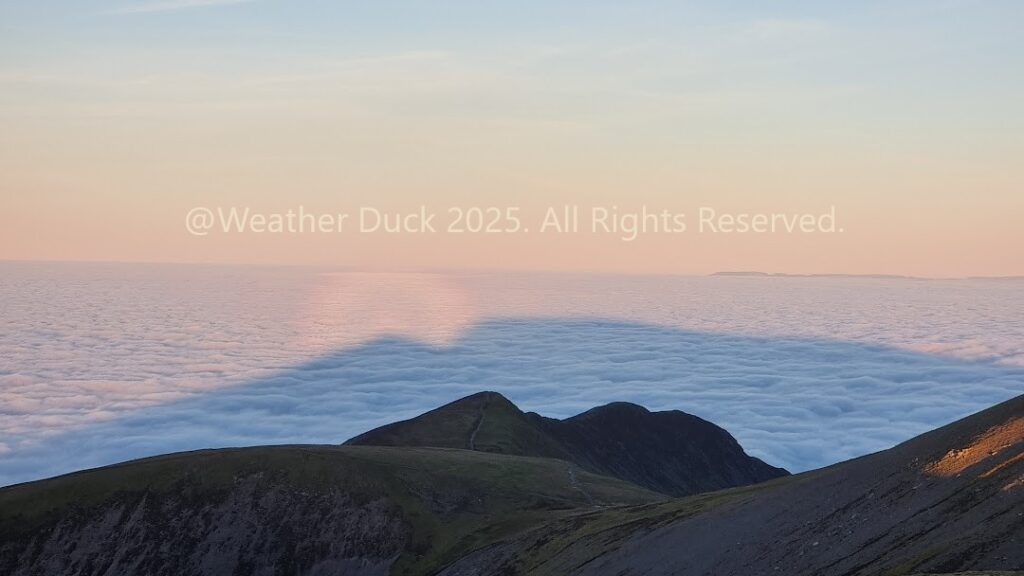
Why was there a cloud inversion?
A cloud inversion forms when cool, moist air becomes trapped on lower ground beneath warmer, drier air. On this morning, the valley moisture produced fog and low cloud while the higher slopes stood in much clearer air.
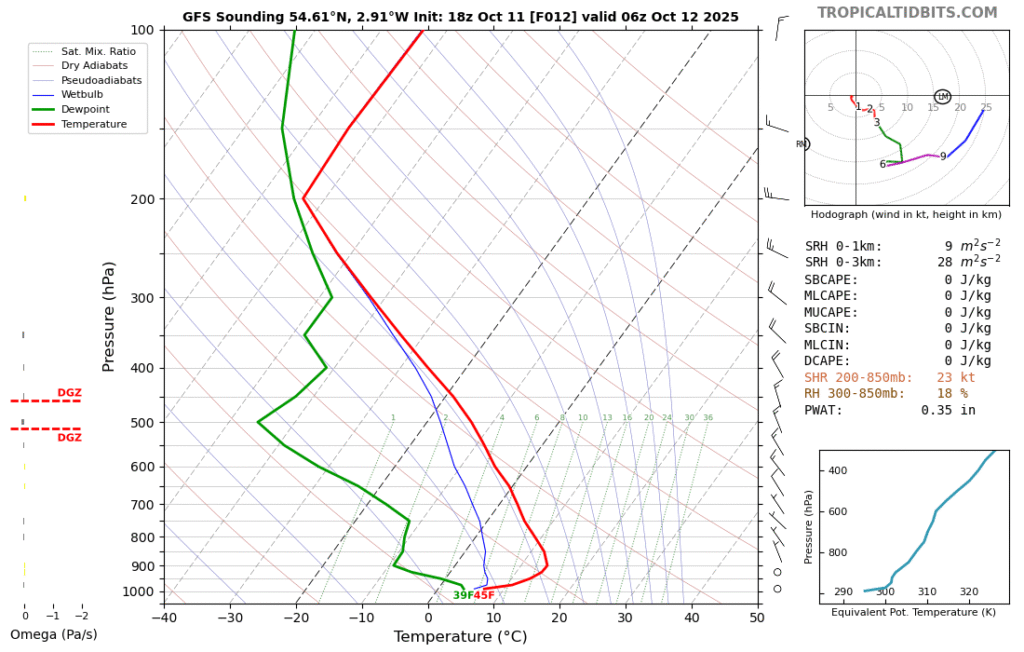
I had also looked at the atmospheric profile before the walk. The temperature and dew-point lines were close together near the ground, suggesting enough low-level moisture for fog or cloud. Higher up, the profile showed the stable layer that helped keep that moisture trapped below.
What I took away from the morning
This experience reminded me that a blanket of fog at the start of a walk does not always mean the whole mountain is covered. Sometimes the most rewarding conditions are waiting just above it. Of course, there is never a guarantee that the cloud top will sit below your viewpoint, and navigation in dense fog still needs care.
For me, the best part was the transition itself: starting in darkness and cold fog, feeling the air change as I climbed, and then stepping into sunshine above the Lake District valleys. It was exactly the sort of morning that made me want to keep documenting these experiences in my Cloud Inversion Series.
You can browse the other personal stories in the Cloud Inversion Series, or check WeatherDuck’s current UK cloud inversion forecast before planning your next outing.